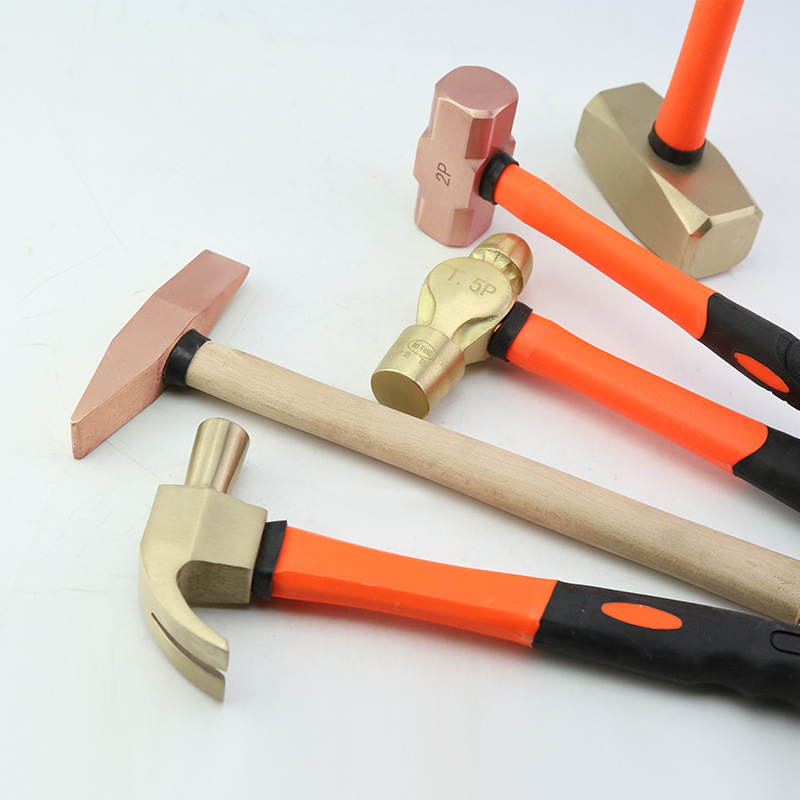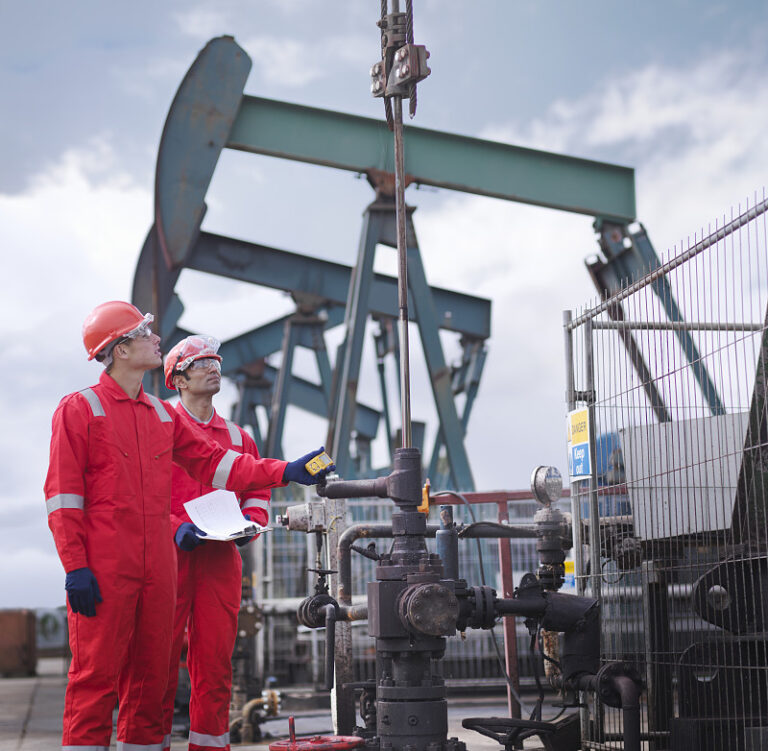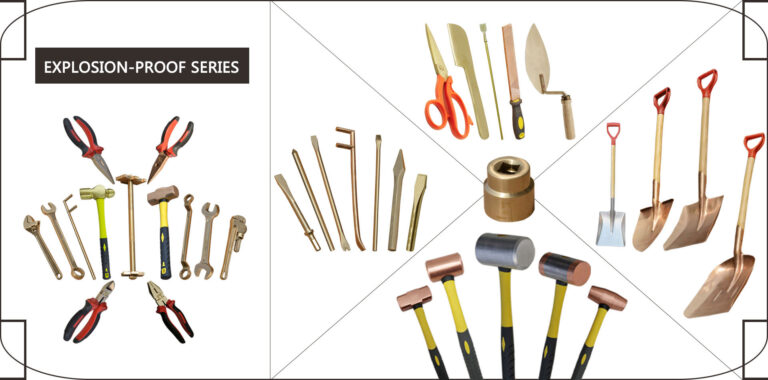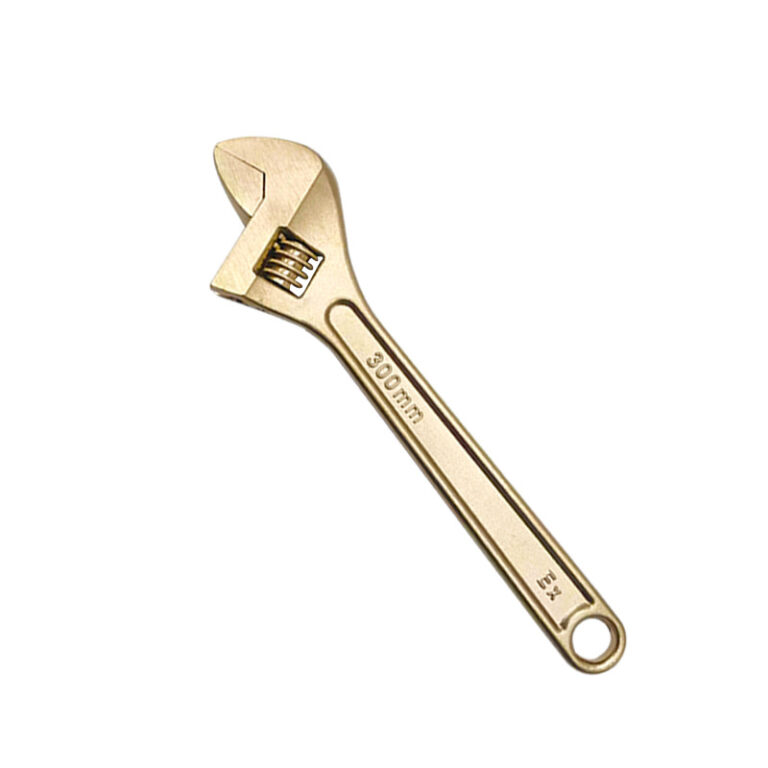

The explosion-proof mechanism of explosion-proof tools (materials) is primarily determined by the inherent properties of the material. The main material of explosion-proof tools is copper, which has excellent thermal conductivity. The reason why ordinary steel tools generate sparks (micro metal particles burning) during impact and friction is mainly due to the high carbon content in steel. When steel is subjected to friction and impact, the heat accumulated in a short period of time cannot be absorbed and conducted in a timely manner. The heat concentrates on the micro metal particles generated during friction and impact, and these particles fly out as sparks (particles burning). The number and size of sparks vary depending on the speed of friction or impact and the degree of contact. For example, when we use a grinding machine to grind metal, a large amount of sparks are generated, while when we use a file to file metal, almost no sparks are visible. Unlike ordinary steel tools, explosion-proof tools (materials) differ in that due to copper’s good thermal conductivity and almost no carbon content, the heat generated during friction or impact with objects is absorbed and conducted in a short period of time. Another reason is that copper itself is relatively soft, so it has good yielding properties during friction and impact, making it less likely to generate micro metal particles. Therefore, we can hardly see any sparks. In fact, when we conduct impact tests and friction tests on explosion-proof materials in a testing chamber, sparks can still be seen because these tests are conducted under high-speed falling and friction conditions, which generate micro metal particles and produce a large amount of heat in a short period of time. However, the heat generated by the tiny sparks (particles burning) at this time is not sufficient to ignite the combustible gases in the testing chamber. Based on the same principle, if we put explosion-proof materials on a grinding machine that is rotating at high speed or use a grinding wheel cutting machine to cut explosion-proof materials, we will see a large amount of sparks because in this case, a large number of metal particles are generated, and the heat accumulated in a short period of time cannot be fully absorbed and conducted. When we use a file to file explosion-proof materials or a saw blade to cut them, almost no sparks are visible because the heat can be absorbed and conducted in a timely manner. Based on this situation, if we use steel tools to loosen nuts made of explosion-proof materials or use steel tools to come into contact with workpieces made of explosion-proof materials, we also cannot see any sparks, which is similar to using explosion-proof tools to come into contact with steel workpieces. From this, we can see that the explosion-proof performance of explosion-proof tools is not absolute, and it is not that they do not generate sparks, but rather that the heat generated by the sparks (particles burning) is not sufficient to ignite combustible gases