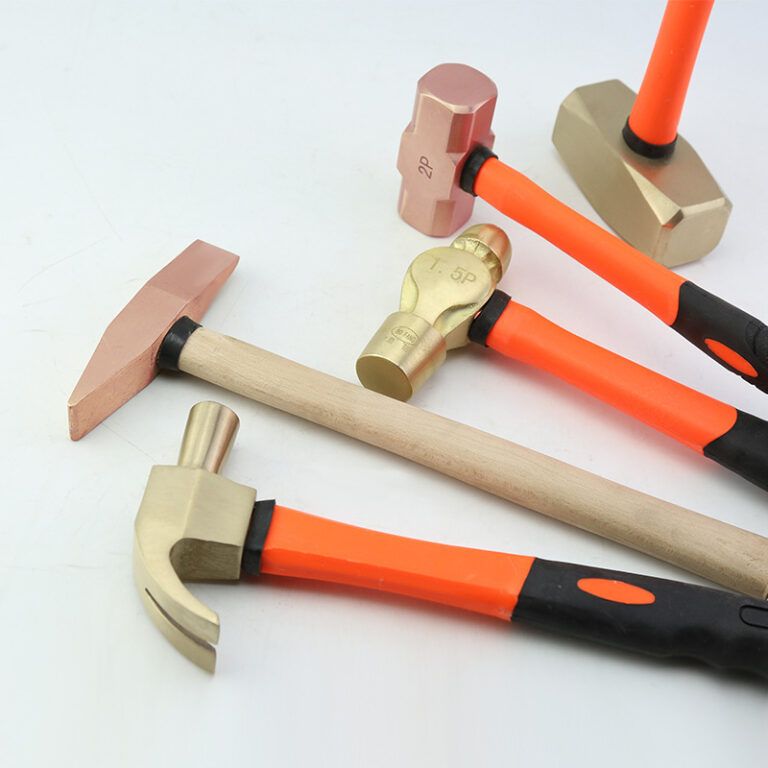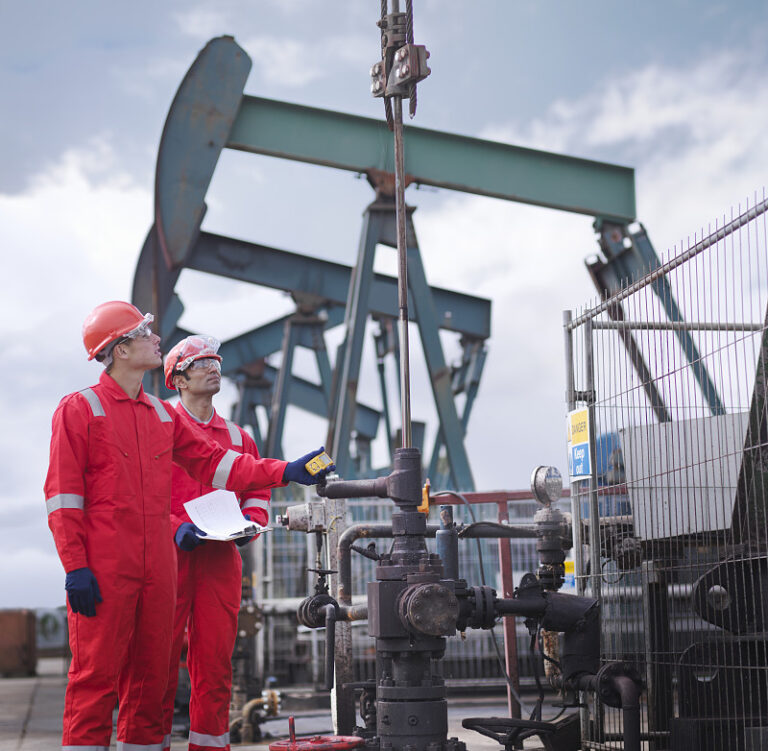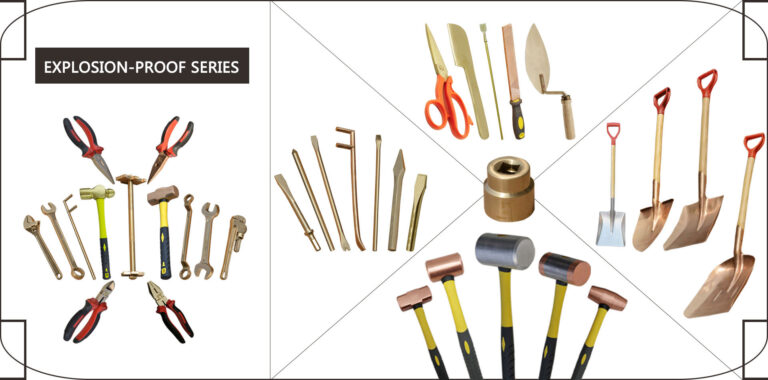
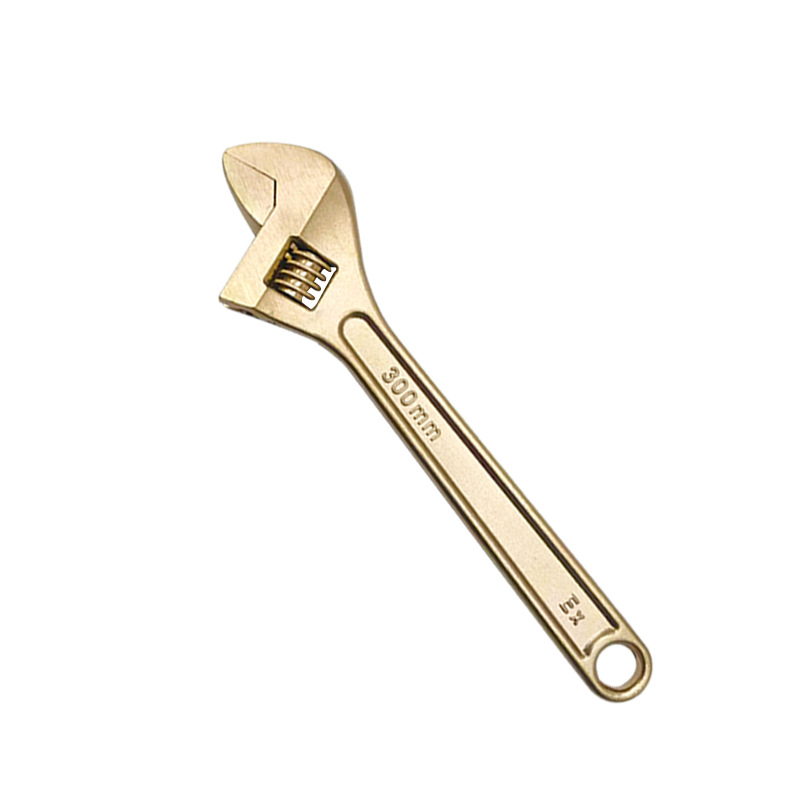

I. Current Status of Explosion-Proof Tools at Home and Abroad Hand tools used in flammable and explosive areas should be made of non-steel materials to avoid sparks generated by collisions, friction, or other reasons between steel and steel, or steel and concrete floors or rocks, which could cause the combustion and explosion of surrounding flammable materials.
This type of hand tools, made of non-steel materials and used in flammable and explosive areas, is called explosion-proof tools (also known as non-sparking tools).
Explosion-proof tools have been produced on a large scale and widely used in China since the 1980s.
Before this, workers in flammable and explosive areas often took risks when using tools for operations by applying butter to the mutual surfaces of steel tools and the contacted parts, or by pouring cold water on the operating parts.
If steel hand tools are needed for maintenance and cleaning in flammable and explosive production workshops, it is considered as a hot work. Prudent companies will have to suspend production, which will affect their business efficiency.
To this end, some large enterprises, as well as non-ferrous metal production and casting processing factories, have manufactured tools made of non-ferrous materials. However, the mechanical properties of most of these tools are not satisfactory, and their explosion-proof performance is also unreliable.
Some units are plated with a layer of non-ferrous metal on steel tools. Due to the wear and tear on the working parts, if there is a collision, the steel surface can be exposed, making the explosion-proof performance unreliable.
II. The explosion-proof mechanism of explosion-proof tools typically involves the friction and impact sparks generated during the intense movement or accidental drop of tools and equipment made of steel materials, such as drills, picks, hammers, pliers, wrenches, and lifting devices. These sparks can serve as concealed ignition sources, making it imperative not to use these tools in explosion-hazardous areas.
Tools (equipment) used in explosion-hazardous areas must be made of special materials that do not generate friction, impact sparks, or even produce hot, high-temperature surfaces.
Steel materials possess high strength and hardness, making them suitable for tool manufacturing. Furthermore, the strength and hardness of steel increase with the increase of carbon content.
However, research findings on the mechanism of friction spark generation in steel materials indicate that it is precisely the carbon contained in steel that is the root cause of friction spark generation.
In order to eliminate friction and impact sparks from tools, people have shifted their focus to copper materials.
Copper, when used as explosion-proof tools, exhibits two notable differences compared to steel:
Firstly, it does not contain carbon, so there is no oxygen-iron-carbon reaction chain, and therefore no sparks. Secondly, copper has relatively low strength and hardness, but higher thermal conductivity than steel. When friction or impact occurs, local friction points undergo plastic deformation, preventing the concentration of frictional energy at individual contact points. Coupled with the high thermal conductivity of the material, the heat generated by friction quickly dissipates into the matrix, reducing the risk of high temperatures at the friction impact points.
The above two points constitute the explosion-proof mechanism of copper (copper alloy) tools. However, pure copper has too low strength and hardness to be directly used as a tool. Therefore, it is necessary to add appropriate elements such as beryllium, aluminum, titanium, nickel, magnesium, etc. to smelt copper-based alloys to improve its strength and hardness.
However, as the strength and hardness increase, the second characteristic of the aforementioned copper material on explosion-proof tools is at risk of being diminished or even disappearing.
Therefore, people further explored the technical approach to “achieve the best of both worlds”. This requires the copper-based alloy formulated to have high strength and hardness at room temperature; once subjected to friction or impact, and the temperature rises to a certain level, the metallographic structure of the copper-based alloy undergoes phase transformation, resulting in reduced strength, plastic deformation, and even wear and tear.
At this time, the metal friction resistance on the local friction surface decreases, and the maximum temperature of friction and impact is limited below the phase transition temperature of the alloy, making it an explosion-proof alloy that cannot ignite explosive mixtures. It is called non-hazardous spark metal abroad.
Currently, various copper-based alloys such as beryllium bronze, aluminum bronze, and J892 copper alloy have been successfully applied in explosion-proof tools in the industry.
III. Explosion-proof performance, mechanical properties, and applicable locations of explosion-proof tools made of different materials (1) Beryllium bronze is a copper-based alloy with copper as the basic alloy element, containing 1% to
2.5%. It also contains trace amounts of cobalt, magnesium, iron, and other trace elements.
Although its physical properties, conductivity, resistivity, and thermal conductivity are lower compared to pure copper, they are more than three times higher compared to steel.
Due to the generally fine unevenness on the surface of solids, the contact between two solid surfaces occurs only at the apexes of the highest protrusions, resulting in a very small actual contact area.
Therefore, during friction, the frictional energy is converted into heat energy and concentrated at the contact points, causing the solid surface at these points to reach extremely high temperatures locally. Among various metals, assuming that their loads and frictional speeds are the same, the lower the thermal conductivity, the higher the temperature at the contact points. When beryllium bronze is subjected to high-speed impact or high-speed friction, its mechanical energy is converted into heat energy when it acts on the surface of an object, causing a sudden increase in surface temperature.
However, due to the high electrical conductivity and thermal conductivity of its material, the heat on the working surface is quickly transferred to other parts of the workpiece, resulting in a significant reduction in heat on the working surface.
Some particles that detach from the workpiece under impact or friction do not reach the temperature of the ignition source.
——The compounds between beryllium and bronze metals are relatively stable and have high melting points, making them resistant to severe oxidation. During high-speed impact or friction, although the temperature of the affected surface or some detached particles may increase, they cannot undergo severe oxidation reactions with oxygen and other combustible gases, thus preventing the formation of an ignition source.
——This characteristic of beryllium bronze has been verified through non-combustibility tests for explosion-proof tools. It is worth noting that, besides this important characteristic, beryllium bronze also possesses another significant trait: after being processed, its tensile strength and hardness are significantly higher than those of other copper alloys.
Due to these two characteristics, this material is widely used in the manufacture of important components and explosion-proof tools for special applications.
(II) Aluminum bronze
The matrix of aluminum bronze is copper. Despite being alloyed, it still exhibits good thermal conductivity. When it rubs or collides with other objects, most of the heat generated is absorbed and dissipated by the tool.
The particles generated during grinding have low heat and will not cause an explosion of air-flammable mixture.